

What Camera Has An Optical Viewfinder ?
Viewfinders are what photographers rely on to accurately compose a pictures. In that location are dissimilar kinds of viewfinders, and it'due south of import to understand the pros and cons of each before buying a camera.
Cameras can have an LCD screen with Alive View, an optical viewfinder, an electronic viewfinder, or a combination of these. For example, many DSLRs cameras at present come with LCD screens with Live View, in addition to an optical or electronic eye-level viewfinder. Many point-and-shoots only take an LCD screen.
The electronic viewfinder engineering has come a long way in the by few years and some DSLRs are using them instead of the more traditional optical viewfinders. Here is a look at each blazon of eye-level viewfinder and what they have to offer.
Optical viewfinder
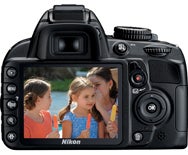
Found on DSLR cameras, an optical viewfinder (OVF) allows a photographer to compose a shot while seeing exactly what the lens sees by looking through the lens (TTL). This optical viewfinder works past using a system of mirrors and prisms, similar a periscope, to bounciness the prototype upwardly to the viewfinder and the eye. This is the preferred viewfinder for many pro-photographers.
The optical viewfinders on signal-and-shoot cameras are different in that they don't show you exactly what the lens sees; they look through a dissever hole above the lens and show a slightly different view from the concluding image.
Pros: The advantages of the OVF are that the photographer sees a scene with no time lag, no resolution limits, and with all the clarity the lens and the human middle tin can produce. Sports shooters rely on this system to see action immediately and conceptualize the kind of timing necessary to capture the correct moment. OVFs likewise save battery since looking through them doesn't require any charge, and the photographer can have fourth dimension to compose a shot earlier turning the camera on. And anyone who has tried to utilise an LCD screen in bright sunlight tin can appreciate that eye-level viewfinders aren't affected by reflections.
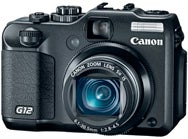
Cons: Optical viewfinders usually show a smaller portion of a frame than what the final image will actually include, and they tin can feel a flake like looking through a tunnel. Camera manufacturers will list the percentage of the frame a viewfinder covers in a production's specs. For example, the Nikon D3100's viewfinder shows 95% of what the sensor captures.
The OVFs on entry-level cameras (sub $i,000) can be a bit dimmer than the ones found on loftier-end models. Also, all autofocus cameras can be a challenge to focus manually while looking through an OVF. A final downside of an optical viewfinder is that the mechanisms required to brand information technology piece of work take up space. In the quest for smaller, lighter photographic camera bodies, OVFs are being replaced with their less-bulky digital equivalent, the electronic viewfinder.
Electronic viewfinders
The electronic viewfinder (EVF) has seen a renaissance in cameras over the by ii years, with the release of new compact interchangeable-lens cameras with live view. Camera manufacturers are presenting EVFs as a serious alternative to the optical viewfinders that are in many high cease DSLRs. Merely what differences remain?
Remove parts similar the mirror, prism, or old fashion Phase Notice autofocus organisation, and a camera's body can be made much more compact. Those parts are replaced by a video feed from the sensor that is displayed on either a screen on the back of the camera, or on a screen inside a viewfinder—the electronic viewfinder. The loftier terminate EVFs found in Micro 4-Thirds, Samsung NX, and Sony SLT cameras aim for a more pleasurable shooting experience by overlaying helpful settings and guides on the EVF screen.
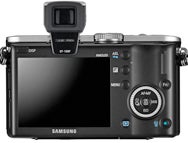
Pros: The view the eye sees through an electronic viewfinder is huge. Because it is video, it can be made to fill up the field of view, which feels more expansive compared to the tunnel-like experience in sub-$grand DSLR cameras. For example, the optional EVF for Olympus' Eastward-P2 photographic camera shows 100% of what the sensor will capture.
Many people find that focusing manually using an EVF is easier than with an OVF because the EVF allows you to magnify an expanse to clearly come across when the field of study snaps into sharp focus. EVF screens also brighten automatically, making it easier to see a scene in depression-light situations, or preview at smaller apertures.
The EVF can also show much more information than an OVF. Besides exposure numbers, an EVF can prove a live histogram map of the dark-to-low-cal tones in the epitome. It can evidence a alive preview of white balance settings and simulate shutter speed, among many things.
It's not just what y'all see through the viewfinder that's different. Using an EVF tin also change the concrete shape of a camera. Remove the need for mirrors, and the camera can be made much smaller, even open the possibility for entirely new shapes and ergonomics. And past removing the mirror, information technology'south easier, physically, to increase the shots taken per second.
Cons: Even with all the bells and whistles, the latest and greatest EVFs are often not expert plenty for many photographers. Though improved drastically over old versions, the refresh rate of an electrical viewfinder still lags a piddling. For instance, trying to catch a diver every bit he or she touches the water might actually result in a pic of legs sticking out of the water. You can miss a baseball batter's swing, or the moment a tennis histrion's racket hits the ball.
Even loftier-resolution video cannot friction match the human eye for seeing detail in shadow and brilliant areas at the same time, picking out fine details, and instant responsiveness — all of which are crucial for studio, sport, and fully manual photography. An EVF can also look jerky and noisy in very low light.
Probably the biggest issue with EVFs is their effect on bombardment life. The photographic camera must be turned on and burning battery juice for an EVF to be used. Currently, interchangeable lens EVF cameras tin but final betwixt 270 and 400 images.
Making your conclusion
Electronic viewfinders offer far more features than the optical diverseness, but do they win out in function? User preference is definitely a key factor in making a viewfinder decision—do you lot prefer to look at subjects through a periscope or a tv?
The increased flexibility and usability experience of a big, detailed EVF may only suit most situations better in the sub-$1000 category of cameras. However, a streamed video feed may never be clear or responsive enough, or accurately show enough dynamic range for some photographers.
Updated at 9:24 PT to clarify terminology.
Source: https://www.macworld.com/article/209140/opticalversuselectronic.html
Posted by: beaudrydonsfult.blogspot.com
0 Response to "What Camera Has An Optical Viewfinder ?"
Post a Comment